|
The Agilent Technologies Europhysics Prize for Outstanding
Achievement in Condensed Matter Physics is an annual award, funded
by donations from the Agilent Foundation to the European Physical Society.
The Europhysics Prize is considered to be one
of the most prestigious physics prizes presented in Europe. Eight
previous winners have subsequently won Nobel Prizes for their work.
Since 1975, the award has been given to leading scientists in nearly
every internationally important area of condensed matter physics.
The award is given in recognition of recent work
by one or more individuals in the area of physics of condensed matter,
particularly work leading to advances in the fields of electronic,
electrical and materials engineering, which, in the opinion of the
Society's Selection Committee, represent scientific excellence.
The Selection Committee consists of five members who are appointed
by the Society and includes an Agilent Technologies' representative.
The Agilent Foundation is proud to continue the tradition of funding the
prize, a tradition started by HP in 1975. It includes a substantial cash award
(51,000 Swiss Francs). This sponsorship demonstrates Agilent's commitment to
technical innovation, including fundamental physics.
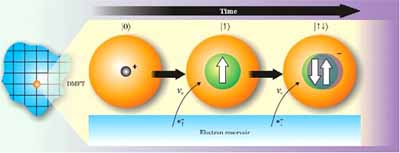
Fig. 1. The Dynamical Mean-Field Theory treats the properties
of solid materials as electrons fluctuate within it. This figure
shows an atom successively capturing two electrons. Reprinted with
permission from Physics Today, March 2004, American Institute of
Physics.
The 2006 Agilent Technologies Europhysics Prize has been awarded to
Antoine Georges, Gabriel Kotliar, Walter Metzner and Dieter
Vollhardt for their development of the Dynamical Mean-Field
Theory.
Within the past century we have repeatedly witnessed remarkable
advances that were made possible by the development of new materials
with useful properties. For example, the revolution in electronics
comes from our ability to understand the physics of semiconductors
and to design devices that utilize their novel properties.
For the advancement of technology, it is of paramount importance
to develop the best theoretical techniques for the understanding
and prediction of the behavior of materials.
There are materials with great potential for technology, however,
for which the prevailing theoretical techniques are inadequate.
For example, the high-temperature superconducting materials are
still not well understood, nor are some materials showing great
promise for advanced magnetic storage devices.
The fundamental physical principles that describe materials are
well known, but the application of these principles is extremely
complex. Even a small sample has huge numbers of interacting particles,
each affecting the motion of all the others. In particular, electrons
are strongly repelled by any nearby electrons. Because it is not
possible to account for the motions of all these particles in detail,
physicists have to make approximations. One method is to assume
that the electrons travel throughout the material interacting weakly
enough that it is sufficient to treat each electron as if it is
in an unchanging sea of other electrons. Another approach is to
assume that the electron-electron repulsion dominates, causing the
electrons to be strongly localized to individual atoms.
Unfortunately, some of the most interesting materials cannot be
understood in either way.
Georges, Kotliar, Metzner, and Vollhardt
have developed and applied a new theoretical method called Dynamical
Mean-Field Theory. In combination with other techniques, this theory
is able to describe the whole range of materials, encompassing weakly
interacting and strongly localized models within one framework that
can also handle the intermediate cases. One of the exciting theoretical
steps is to imagine the material in a space of higher dimension
and then make the approximation that the number of dimensions is
infinite. This radical assumption greatly simplifies the equations
and leads to remarkably accurate predictions.
The winners of the prize have applied their new theory to many
materials, explaining phenomena that had previously been poorly
understood, and making predictions that were subsequently verified
by experiment. A rich new field of condensed matter physics has been
created that will surely result in many important insights and
discoveries in the years to come. Some of these discoveries will
have direct application to the development of technology, making
this an outstanding choice for the Agilent Technologies Europhysics
Prize.Prior Year Winners and Citations
|



 United States Home >
About Agilent > Agilent
in the Community > Corporate Contributions
>
United States Home >
About Agilent > Agilent
in the Community > Corporate Contributions
>


 Login
Login
 Contact Us