Andrew Baker
Serin W309
Phone: 848-445-8887
Email: ajbaker[at]physics.rutgers.edu
Office hours: Thu 11:00am-12:00pm & 2:00-3:00pm
Venue
Mon/Thu 8:30-9:50am in Hill Center 009
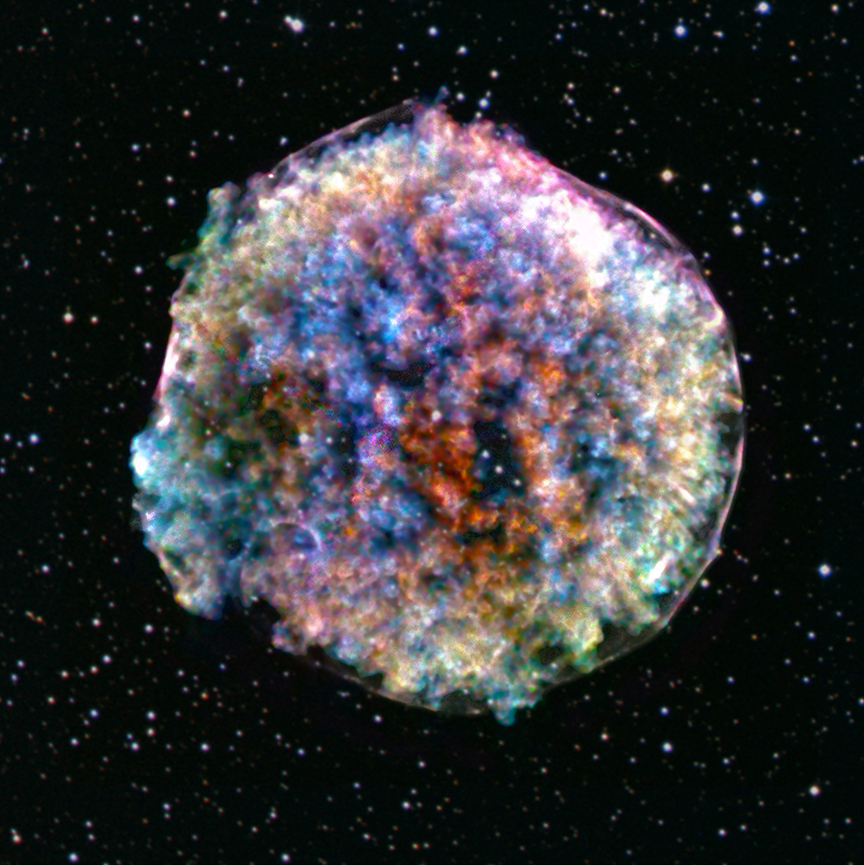
|
Instructor Andrew Baker Serin W309 Phone: 848-445-8887 Email: ajbaker[at]physics.rutgers.edu Office hours: Thu 11:00am-12:00pm & 2:00-3:00pm
Venue |
|
Textbooks
There is one required textbook for this course:
Overview
Here's the official description from the course catalog:
Prerequisite(s): 01:750:342 or (361 and 385-386)
Radiation and scattering processes in plasma. Detection and X- and gamma-rays. Supernovae and remnants, pulsars. Gamma-ray bursts. Accretion disks and binary star outbursts. Quasars and active galactic nuclei. Cosmic rays.
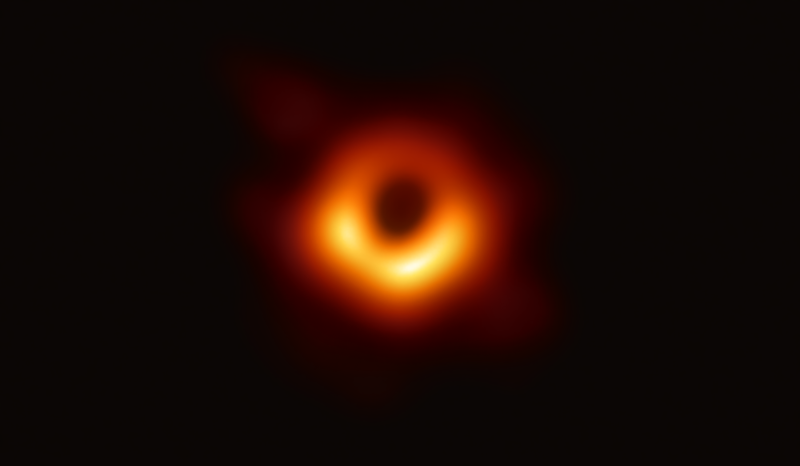
I plan to broaden this list of topics to include important recent discoveries (e.g., studies of black holes using gravitational waves and very long baseline interferometry), and in general, subjects that are important to areas of current research in Galactic and extragalactic astrophysics and cosmology.
Schedule
Both the sequence of lectures and the assignment due dates are preliminary at this point; I will update them as needed during the course of the semester.
I will include in the schedule the dates of any local talks that are relevant to the subject matter of this course. Attendance is encouraged but not required!
| LECTURE | DATE | TOPIC | TEXT | DUE |
|---|---|---|---|---|
| 1 | Sep 3 | high energy astrophysics overview | — | |
| 2 | Sep 8 | special relativity | — | HW0 |
| 3 | Sep 10 | collisions and ionization losses | — | |
| 4 | Sep 14 | radiation basics | — | HW1 |
| 5 | Sep 17 | photon interactions with matter | 2.2 | |
| 6 | Sep 21 | blackbody radiation | 2.1; 2.3.1 | HW2 |
| 7 | Sep 24 | thermal emission/bremsstrahlung | 2.3.2 | |
| 8 | Sep 28 | synchrotron radiation | 2.3.3 | HW3 |
| 9 | Oct 1 | thermal equilibrium | — | |
| 10 | Oct 5 | high energy detectors | 3.1; 3.2; 3.4 | HW4 |
| 11 | Oct 8 | telescopes | 3.3 | |
| 12 | Oct 12 | cosmology and galaxy clusters | — | HW5 |
| 13 | Oct 15 | mid-term exam (in-class) | — | |
| 14 | Oct 19 | stellar evolution | ||
| 15 | Oct 22 | supernova classification | ||
| 16 | Oct 26 | supernova mechanisms | HW6 | |
| 17 | Oct 29 | shocks and supernova remnants | ||
| 18 | Nov 2 | compact objects | HW7 | |
| 19 | Nov 5 | neutron stars and black holes | ||
| 20 | Nov 9 | black hole binaries | HW8 | |
| 21 | Nov 12 | motion around black holes | ||
| 22 | Nov 16 | accretion | HW9 | |
| 23 | Nov 19 | radio interferometry | ||
| 24 | Nov 23 | radio jets | HW10 | |
| 25 | Nov 30 | fast radio bursts | ||
| 26 | Dec 3 | particle acceleration | ||
| 27 | Dec 7 | pulsars and wind nebulae | HW11 | |
| 28 | Dec 10 | Compton processes; the Sunyaev-Zel'dovich effect |
Grading
Your course grade will be based on a weighted combination of four elements:
Class participation will be scored as follows for each session:
Homework assignments will generally be made available on Monday and submitted (by emailed or uploaded PDF before 11:59pm) the following Monday. They will include straightforward examples or extensions of material discussed in lecture, and more involved applications to areas of current research, which may encompass some computational work (especially later in the semester).
The midterm exam will be in class on October 15.
The final project will include an oral presentation and a written paper on a scientific or technical topic relevant to high-energy astrophysics. The paper should be written in LaTeX. More information will be provided about this assignment as the semester progresses.
Other items