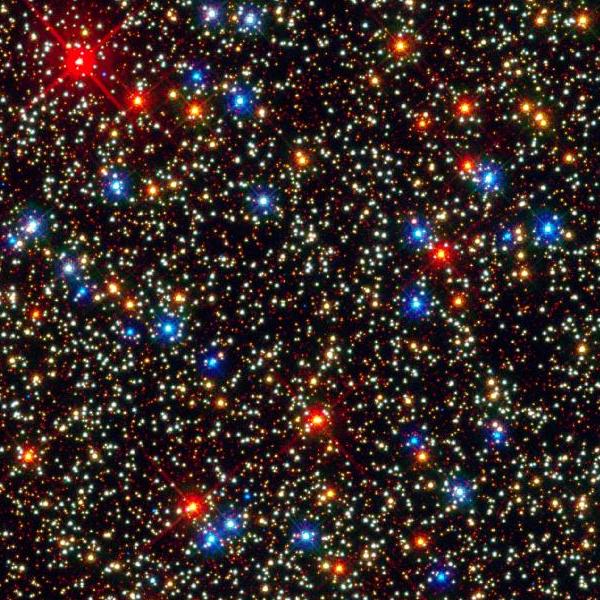
We will study the observed properties and physics of stars, including their internal structure, energy generation and transport, and their atmospheres. We will examine star formation, stellar evolution, and stellar remnants, including white dwarfs, neutron stars, and black holes.
Prof. Saurabh W Jha (he/him)
Room 315, Serin Physics Building, Busch campus
Email: saurabh[at]physics.rutgers.edu
Phone: 848-445-8962 (email preferred)
Office hours: Thursdays 11 am – 12 noon, or by appointment
The required textbooks we will use are The Physics of Stars (2nd edition, 1999, Wiley) by A.C. Phillips and Understanding Stellar Evolution (2017, IOP) by H. Lamers and E. Levesque, which you can download as a PDF free from a campus network.
Supplementary textbooks (not required) include Principles of Stellar Evolution and Nucleosynthesis by D. Clayton, and Stars and Stellar Processes by M. Guidry.
We will have roughly biweekly problem sets due on Fridays at 11:59 pm on Canvas in PDF format. In working on the problem sets, you are encouraged to work in groups, though your submitted write-up should be your own. You must list your collaborators on the write-up. You are allowed to consult any outside sources (which must be cited), except that you may not examine problem set solutions from previous years of Physics 441 or other similar courses online. Late problem sets will be accepted with a 25% penalty until Sunday evening. Solutions will be posted by Monday; no problem sets will accepted after the solutions are posted.
Students enrolled in Physics 541 (the graduate level version of the class) will be required to do extra problems on the problem sets. These problems may be completed for extra credit for students in 441.
There will be one in-class midterm exam and a final exam scheduled by the university. There will also be a group project, where, in a group of two or three people, you will present a 15–20 minute lecture on a topic of your choice.
The final grade will be calculated from the problem sets (50%), midterm exam (15%), group project (10%), and final exam (25%). The lowest problem set grade will be dropped in calculating the final grade.
Students are expected to maintain the highest level of academic integrity. You should be familiar with the university policy on academic integrity. Violations will be reported and enforced according to this policy. Physics 541 students should also note the department's page on academic integrity for graduate students.
Use of external website resources (such as Chegg.com or others) to obtain solutions to homework assignments or exams is cheating and a violation of the University Academic Integrity policy. Cheating in the course may result in grade penalties, disciplinary sanctions or educational sanctions. Posting homework assignments or exams to external sites without the instructor's permission may be a violation of copyright and may constitute the facilitation of dishonesty, which may result in the same penalties as cheating.
The Rutgers honor pledge will be included on all major assignments for you to sign: On my honor, I have neither received nor given any unauthorized assistance on this examination/assignment.
Almost all original work is the intellectual property of its authors. In this course, this includes syllabi, lecture slides, recorded lectures, homework problems, exams, and other materials, in either printed or electronic form. You may not copy this work, post it online, or disseminate it in any way without the explicit permission of the instructor. Respect for the author's efforts and for the author’s intellectual property rights is an important value that members of the university community are expected to take seriously.
A computer will be needed for the problems that require a numerical solution. A phone camera with an app such as Adobe Scan, Office Lens, Apple Notes, or something similar will be useful to convert pictures of your completed assignments into PDF format for upload and submission to Canvas. Please visit the Rutgers Student Tech Guide page for resources available to all students. If you do not have the appropriate technology for financial reasons, please email the Dean of Students for assistance. If you are facing other financial hardships, please visit the Office of Financial Aid.
This schedule will be updated as the semester progresses. Book chapters are labeled P for Phillips (1999) and LL for Lamers & Levesque (2017).
Lecture |
Date |
Topics |
Chapter |
Assignment |
1 |
Jan 18 (Thu) | physical and observational intro |
P1, LL1 |
|
2 |
Jan 22 (Mon) |
LL2 |
||
3 |
Jan 25 (Thu) |
simple stellar models: polytropes |
LL3, 4.8, 11 |
|
4 |
Jan 29 (Mon) |
equations of state |
P2, LL4 |
|
5 |
Feb 01 (Thu) |
stellar atmospheres; ionization |
PS 1 due Feb 02 |
|
6 |
Feb 05 (Mon) |
energy transport: convection |
P3, LL7 |
|
7 |
Feb 08 (Thu) |
energy transport: radiation |
LL6, 5 |
|
8 |
Feb 12 (Mon) |
nuclear energy generation |
P4, LL8 |
|
9 |
Feb 15 (Thu) |
PS 2 due Feb 16 |
||
10 |
Feb 19 (Mon) |
solar neutrinos |
||
11 |
Feb 22 (Thu) |
stellar interiors; solar model |
P5, LL10, 13 |
|
12 |
Feb 26 (Mon) |
stellar evolution |
LL14, 16–19 |
|
13 |
Feb 29 (Thu) |
PS 3 due Mar 01 |
||
14 |
Mar 04 (Mon) |
pulsation |
LL21 |
|
exam |
Mar 07 (Thu) |
in-class midterm exam |
||
Mar 11, 14 |
spring break | |||
15 |
Mar 18 (Mon) |
white dwarfs |
P6, LL20 | |
16 |
Mar 21 (Thu) |
deaths of massive stars |
LL20, 26, 27 |
|
17 |
Mar 25 (Mon) |
|||
18 |
Mar 28 (Thu) |
binary star evolution | LL28, 29 | PS 4 due Mar 29 |
19 |
Apr 01 (Mon) |
novae and supernovae |
LL27, 29 |
|
20 |
Apr 04 (Thu) |
stellar nucleosynthesis | LL15, 30 |
|
eclipse! |
Apr 08 (Mon) |
no class |
||
21 |
Apr 11 (Thu) |
star formation
|
PS 5 due Apr 12 |
|
22 |
Apr 15 (Mon) |
stellar initial mass function | ||
23 |
Apr 18 (Thu) |
before the main sequence |
LL12 | |
Apr 22 (Mon) |
no class |
|||
Apr 25 (Thu) |
no class |
PS 6 due Apr 26 |
||
24 |
Apr 29 (Mon) |
group presentations |
||
exam |
May 02 (Thu) |
final exam 12-2p Serin 401 |
Lectures 1–2. Physical and observational introduction to stars. Order of magnitude stellar structure.
Lecture 3. Simplified stellar interior models: polytropes.
Lectures 4–5. Equations of state. Stellar atmospheres; Boltzmann equation. Ionization; Saha Equation.
Lecture 6–7. Energy transport in stars.
Lectures 8–10. Nuclear energy generation in stars. Solar neutrinos.
Lectures 11–13. Stellar interiors; models of the Sun. Main-sequence and post-main-sequence stellar evolution.
Lecture 14. Stellar pulsation.
Lecture 15. Endpoints of stellar evolution: white dwarfs. Electron degeneracy. Chandrasekhar limit.
Lectures 16–17. Late stages of massive stars; core-collapse supernovae. Stellar remnants: neutrons stars and black holes.
Lectures 18–19. Binary star evolution; close binaries; mass transfer. Accretion; X-ray binaries; novae; white dwarf supernovae.
Lecture 20. Stellar nucleosynthesis; star/gas/star cycle.
Lecture 21–22. Star formation; stellar feedback; initial mass function.
Lecture 23. Pre-main-sequence stellar evolution. Hayashi track.
Lectures 24. Group presentations.
Potential topics for group presentations: Helio/asteroseismology. LIGO black holes and their progenitors. Population III stars. Metal-poor stars. Brown dwarfs. Stellar rotation/activity/age. Exoplanet host stars. Pulsars. Magnetars. Gamma-ray bursts. Stellar multiplicity. Stellar winds/mass-loss. Planetary nebulae. Numerical modeling (MESA). Stellar pulsation/variables. Standard candles (Cepheids, RR Lyrae, Mira). History of stellar classification.
Student wellness resources are available at Rutgers.
Students with disabilities should consult the department policy.
Astrophysics at Rutgers • Department of Physics and Astronomy • Rutgers University
Last updated: April 16, 2024 swj